
Published: August 26, 2026
Bispecific Therapy: Bringing the Future of Cancer Treatment to Our Community
The future of cancer care is arriving faster than ever, and one of the most exciting breakthroughs is bispecific therapy. This innovative form of immunotherapy is transforming the way certain cancers are treated by harnessing the power of the body’s own immune system to fight cancer with remarkable precision. As new bispecific therapies continue to receive approval, they are redefining what’s possible in cancer treatment and expanding access to advanced therapies in outpatient cancer centers across the country.
For many patients, this means receiving state-of-the-art treatment without the need for lengthy hospital stays. Instead, many bispecific therapies can be safely administered in specialized outpatient infusion centers, allowing patients to spend more time at home with family while receiving world-class care close to home.
What Is Bispecific Therapy?
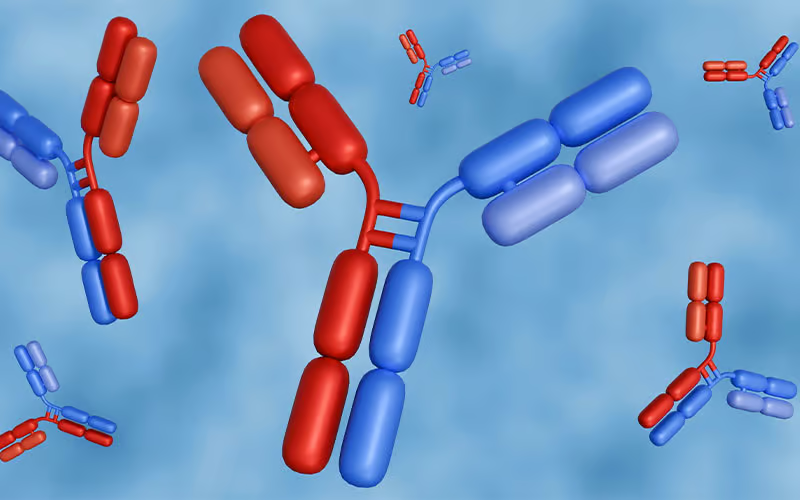
Bispecific therapy uses specially engineered proteins called bispecific antibodies. Unlike traditional antibodies, which recognize only one target, bispecific antibodies are designed to bind to two targets at the same time. One end attaches to a cancer cell, while the other connects to a T cell—one of the immune system’s most powerful cancer-fighting cells.
Think of it as building a bridge between the immune system and the cancer. By bringing these cells together, bispecific antibodies help the immune system recognize, attack, and destroy cancer cells more effectively.
Who Can Benefit?
Today, bispecific therapies are approved for several blood cancers, including certain types of leukemia, lymphoma, and multiple myeloma. They are also approved for treating lung cancer. Clinical trials are exploring their use in many other cancers, making this one of the fastest-growing areas of cancer research.
What Should Patients Expect?
Like any cancer treatment, bispecific therapy may cause side effects, particularly as the immune system becomes activated. Some patients may experience fever, chills, fatigue, or low blood pressure. Fortunately, cancer care teams are specially trained to monitor these reactions and provide prompt treatment when needed. With careful observation and expert supportive care, many patients successfully receive bispecific therapy in the outpatient setting.
Looking Ahead
Bispecific therapy represents more than a new treatment—it represents a new era in cancer care. By combining cutting-edge science with the body’s own natural defenses, these therapies are creating new options for patients and new hope for families facing cancer.
To learn more about all of our infusion services, please visit our Oncology Infusion Services page.